
Choose the learning task before choosing a Human Atlas link. Do you need to locate a structure in a whole-body reference, or spend a few minutes looking at one organ? NavSprout selects ashemag/human-atlas for its inspectable anatomy-explorer source, while documenting an unavailable demo and a separately checked alternative. The goal is a useful study starting point, not treating similarly named websites as interchangeable.
Human Atlas links at a glance
- Original project
- ashemag/human-atlas on GitHub ↗
- Former Vercel demo
- human-atlas-seven.vercel.app ↗ — returned HTTP 503 on October 19, 2026.
- Reachable alternative
- humanatlas.vercel.app ↗ — homepage and Heart route checked; official migration not verified.
Why it’s here
The original project makes a concrete learning approach inspectable: navigate a body, choose systems and focus on named structures. Its repository explains the data and its limits. That matters when you want to understand what a visualization represents. The former live demo was unavailable during our check, so this selection points to the source rather than promising an instant working copy of its full viewer.
A task to try: inspect one organ before expanding
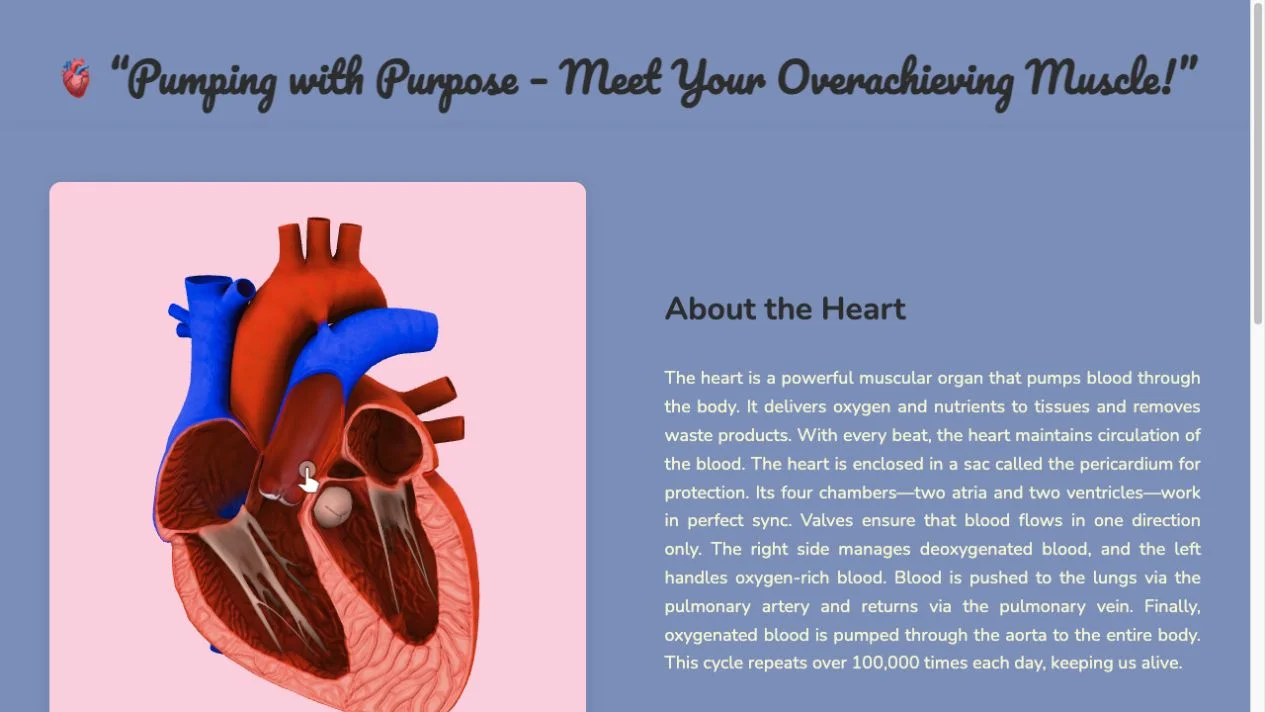
At the alternative humanatlas.vercel.app, choose Explore Heart and wait for the page content and model. Note one visual question you want to investigate in your course material, then decide whether this presentation helps you orient yourself. We completed the navigation and observed the heart model render. The study exercise itself is a suggestion; we did not assess learning outcomes or the accuracy of every label.
Choose whole-body context or organ-focused browsing
The original source documents system toggles, anatomical-name search, isolation and exploded layouts around BodyParts3D reference anatomy. The alternative we opened uses separate organ pages and descriptive text. Use the former documentation to evaluate a whole-body exploration workflow and the latter as a separate preview for a focused topic. No official migration or matching feature set was verified.
What to do with the broken old demo link
The repository-linked human-atlas-seven.vercel.app returned 503 on October 19, 2026. Keep the repository bookmarked if you want to return to that specific project; the response did not establish a permanent shutdown or its cause. A working alternative can help with today’s exploration, but should be saved under its own address and checked independently.
What the screenshots show, and what they do not
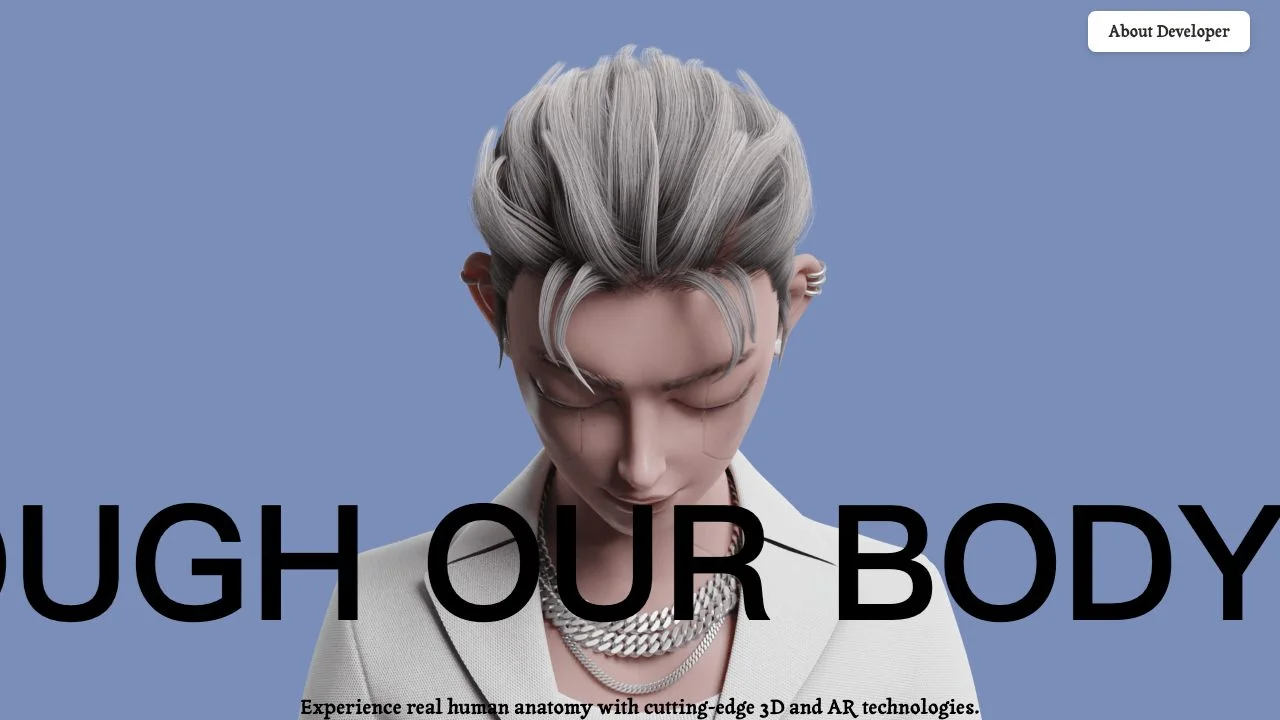
The homepage and Heart screenshots are captures of the alternative site. A model appeared after the text had loaded, so a momentarily blank viewer was not treated as final failure. We did not test AR, every organ, rotation controls or mobile performance. These pictures establish the visible interface in one browser session, not a comparative anatomy benchmark.
Check the reference and reuse conditions
The original uses adult male reference anatomy and explicitly limits itself to education. If you adapt its code for teaching, read both the MIT application license and the separate CC BY 4.0 anatomy-data attribution. A reference model is a selected representation rather than a complete account of every structure or variation. This selection is not a clinical recommendation.
Suggested next steps
- Decide whether your question needs whole-body context or one organ.
- For a quick alternative-site preview, follow Explore Heart and wait for its model.
- Write one visual question to check against your learning material.
- Return to the original repository if you need its documented system and structure workflow.
- Keep attribution and reference limitations with any adapted teaching material.
Who this guide suits
Learners who can define one anatomy question and check a visual reference against their own study material.
What to keep in mind
Confirm which site you are using and whether its model has loaded. This selection does not verify all organs, clinical accuracy or an official transfer between the two addresses.
Human Atlas Vercel app FAQ
Why is human-atlas-seven.vercel.app not working?
The former demo address returned HTTP 503 during our October 19, 2026 check. We did not establish the cause, shutdown date or a restoration timetable. The repository remains accessible.
Is humanatlas.vercel.app the official replacement?
It is a reachable alternative supplied for this guide. We opened its organ-oriented homepage and Heart page, where a model eventually rendered. We found no verified migration relationship with ashemag/human-atlas, so its features should be evaluated separately.
Which icon does this listing use?
The listing uses public/favicon.svg from the original ashemag/human-atlas repository, unchanged. It identifies the source project; it is not presented as the alternative website’s verified brand.
What did NavSprout actually try?
We opened the alternative homepage, followed Explore Heart and observed text and a rendered heart model. We also checked the original repository and the old demo response. We did not test the original viewer live.
Which learning task suits each route?
The original source documents whole-body system and structure exploration. The alternative’s Heart page offers a narrower organ-focused starting point. Their workflows and coverage were not verified as equivalent.
Should I use the model for medical decisions?
No. The original project is explicitly educational and not diagnostic or surgical. NavSprout has not validated clinical accuracy or every explanation on the alternative website.
Sources and verification
- Original repository and README ↗
- Original data attribution ↗
- Former demo — returned 503 ↗
- Separately checked alternative ↗
Checked October 19, 2026. The original source was read, not run locally. The former demo returned 503. The alternative homepage and Heart page were inspected, with a heart model rendering after loading. AR, all-organ coverage, rotation and physical-device performance were not tested. The original repository favicon is used unchanged; no affiliation between source and alternative is implied.