
What is Agent-Native?
Agent-Native is worth evaluating when the outcome you want is an application people and an agent can both operate. NavSprout’s suggested starting task is deliberately small: make one action produce an inspectable result through both a UI and agent interaction. The framework supplies a documented pattern for that relationship; whether it helps your product depends on the workflow you build around it.
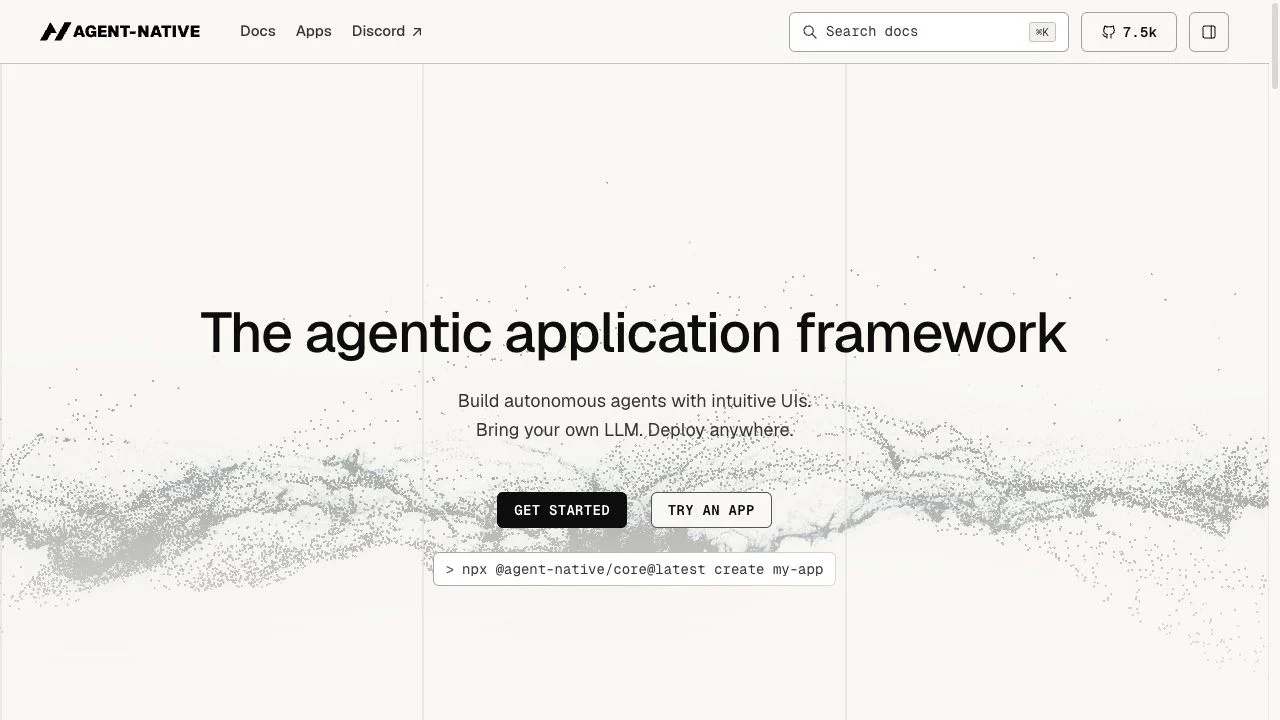
Core features
- One typed capability reused by UI and agent
- Starter templates and an official app catalog
- Human-facing review through React screens and agent chat
- Shared persistent state rather than separate agent-only results
- Choice of model connection and supported hosting target
Why it’s here
Some agent projects produce answers but leave users without a useful place to inspect or change the result. Agent-Native addresses the application side: actions, a purpose-built interface, application context and shared data. It belongs on a development shortlist when these pieces need to work together. It is a framework choice, not simply another general chat assistant.
A task to try: make one result visible twice
Use the official starter guide’s hello action to understand the pattern first. Then choose a tiny task in your own domain, such as changing a sample record’s status. Define what the user sees before and after, invoke the operation from the UI and ask the agent to use the same capability. Compare the resulting state instead of judging only the wording of the agent response. This is a proposed trial, not a test NavSprout completed.
What should the trial establish?
A successful evaluation should show that both routes reach the intended operation, inputs are checked and a person can recognize the resulting change. The action definition bundles a description, input schema and handler. The framework also documents shared application context and persistent state. Start with reversible sample data so that product behavior and the human review step stay easy to understand.
Should you start with a template or the framework guide?
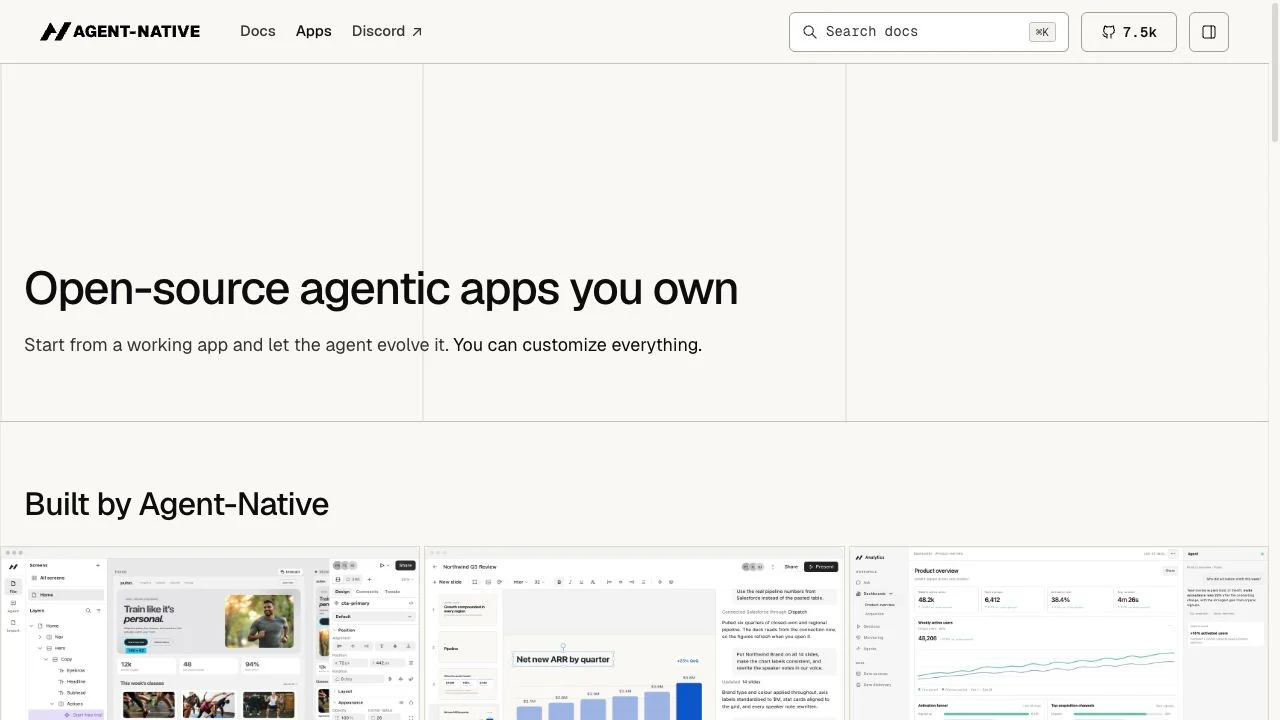
The app catalog offers examples such as analytics, slides and calendar work, with alpha labels visible during our check. Browse for a familiar review surface: a chart, a visual document or an event. If an example is close to your intended workflow, inspect that app’s guide before adapting it. If not, a small starter may make the architecture easier to evaluate than inheriting a larger domain app.
What needs planning beyond the first demo?
A local result is only one part of adopting an application framework. Agent-Native uses PostgreSQL for shared app data, and its deployment guide requires persistent PostgreSQL for hosted environments. Choose a model connection, decide where the application will run and account for the services it depends on. Evaluate those responsibilities while the prototype is still small.
How should you compare the cost?
The framework repository is MIT licensed, so a source-code license fee is not the same question as the cost of running your app. Consider your selected model, database, hosting and connected services separately. We did not verify an all-in hosted price or compare provider bills. Treat free-source access as permission to inspect and adapt the code, not as a budget for unlimited agent execution.
When is it the wrong tool to add?
If your actual bottleneck is reviewing ordinary code changes, you may need an editor and repository workflow rather than a new app architecture. If you want one ready-made output without maintaining software, inspect the relevant finished app separately. Choose Agent-Native when the reusable action, shared state and human review surface are part of the product you intend to own.
Use cases to consider
- Compare UI-driven and agent-driven changes to the same small internal tool.
- Prototype an editable report or slide workflow before adding more automation.
- Evaluate whether a template’s review surface fits a calendar or inbox product.
- Keep human inspection visible while assessing a custom agent-assisted application.
How to start evaluating Agent-Native
The official guide offers a Chat starter:
npx --yes @agent-native/core@latest create my-app --standalone --template chatReview the current setup guide for prerequisites and the remaining installation steps. The command is shown for reference; we did not execute it for this article.
- Write one acceptance criterion for a visible user task.
- Read the official starter prerequisites and included hello action.
- Use sample data to define a small operation and its UI result.
- Exercise the capability through both the interface and the agent.
- Check the persisted result and the user’s ability to inspect it.
- Estimate provider and deployment responsibilities before adding more features.
Who it suits
Developers and small teams who can define a bounded app task and want to evaluate the human review experience before committing to a framework.
Before adopting it
The trial is a suggested exercise. We have not validated runtime behavior, integrations, deployment performance or provider costs.
Agent-Native FAQ
What job does Agent-Native serve on NavSprout’s shortlist?
Building an application where humans and agents share capabilities and data, with an interface for reviewing the result.
What is a useful first evaluation task?
Start with the documented hello action, then try one small operation on sample data through both UI and agent routes. Define an inspectable result before judging the framework.
Was the proposed trial completed for this listing?
No. We inspected the official website, catalog, guides and source repository. We did not generate a project, call a model or deploy an application.
Are the official apps finished production recommendations?
The app catalog displayed alpha labels when checked. Use their current documentation to assess fit and readiness for your own task.
Can I avoid infrastructure costs by choosing open source?
Open source describes access and licensing. Your model, persistent PostgreSQL database, host and connected services can still have their own costs.
What should I compare it with?
Compare it with the work you actually need: an editor for repository changes, a ready-made tool for one output, or an application framework when shared agent and UI behavior is part of the product.
Related by purpose
Use GitHub for a reviewable code history and Cursor for an editor-centered coding workflow. These are independent NavSprout suggestions; they serve different parts of development rather than being equivalent agent frameworks.
Sources and review scope
- Official overview ↗
- Getting started ↗
- Defining actions ↗
- Shared database model ↗
- Deployment requirements ↗
- Source repository and MIT license ↗
- Reference listing on Toolify ↗
Checked October 20, 2026: official overview, app catalog, setup, action, database and deployment documentation, plus the source repository and MIT license. Toolify informed the directory-style structure. No starter was installed, model connected, external account linked or app deployed for this introduction. The favicon is the original asset declared by the official website.