HTTP vs HTTPS: Compare Two Packet Traces
Both traces fetch a page. Follow the two flows side by side and see which layers change when the request uses HTTPS over TCP.
Explore Protocol Explorer & its website →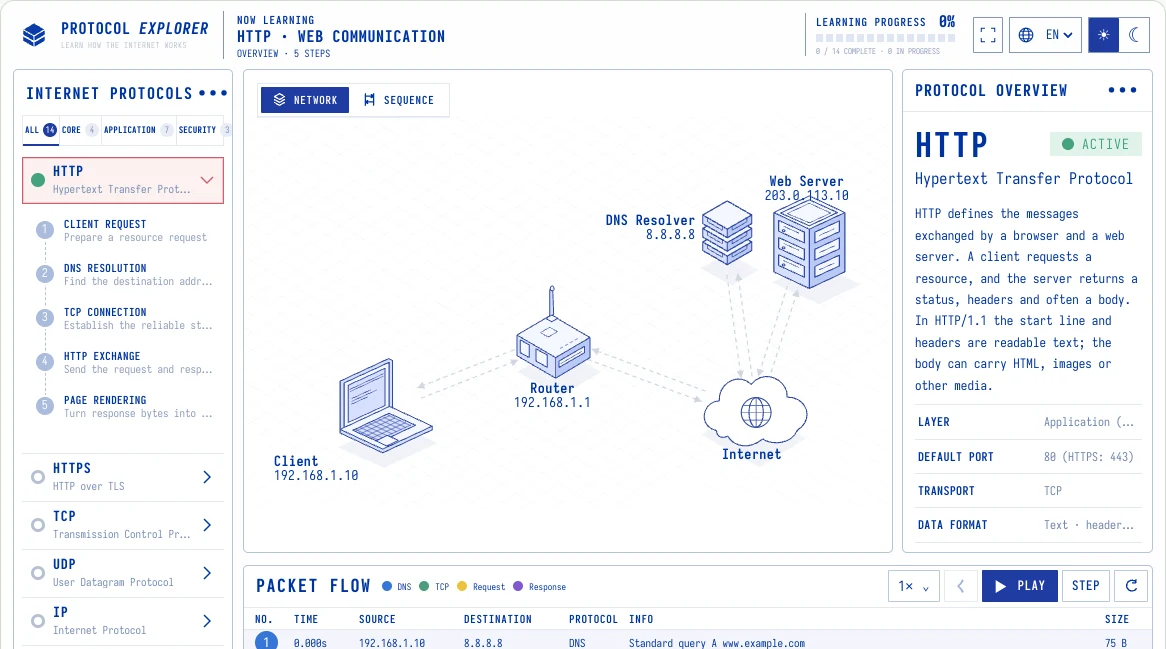
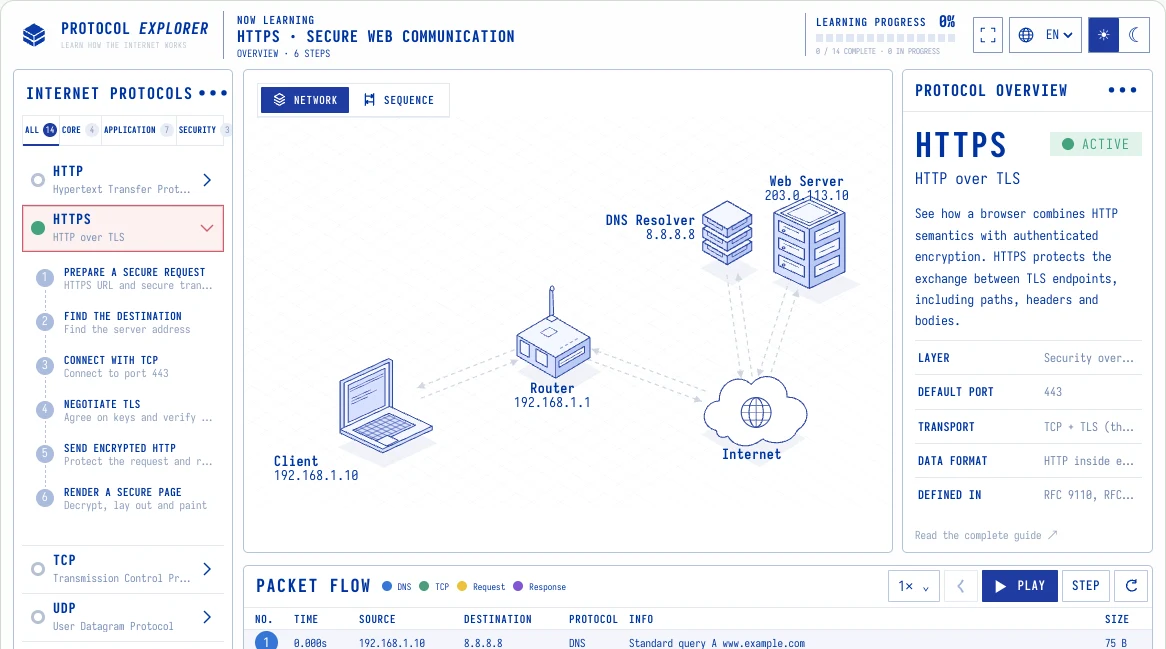
This exercise compares the HTTP and HTTPS scenarios bundled with Protocol Explorer. The workbench generates sample bytes and timing locally. The traces represent fresh connections over TCP.
Read an HTTP request and reply
- Open the HTTP lesson and advance through the steps until Packet flow shows GET / HTTP/1.1. Select the row to inspect the request.
- Look for the Host header and the request target /. Together they identify the page being requested in this example.
- Inspect the 200 OK response in the same step. Locate Content-Type and Content-Length, then check what begins after the blank line. The example body is <h1>Hello</h1>.
Find what TLS changes
- Open the HTTPS lesson and follow the packets through the DNS and TCP stages. Check the transport destination in the TCP handshake.
- Advance to Negotiate TLS. Identify the ClientHello and ServerHello rows, then find the encrypted handshake record.
- Advance to Send encrypted HTTP and inspect the application records. The packet inspector exposes illustrative TLS bytes. The request line and headers are available to the endpoints after decryption.
Record three differences
Now predict what a repeat page load might omit. A DNS cache can supply the address locally, and an existing connection can carry another request. The sequence in the lab models a fresh visit.
| Stage | HTTP trace | HTTPS trace |
|---|---|---|
| Name lookup | DNS appears before the connection | DNS appears before the connection |
| Transport | TCP to port 80 | TCP to port 443, followed by TLS |
| Page exchange | Request and reply headers are visible in HTTP rows | HTTP travels inside encrypted TLS records |
Common questions
Does HTTPS hide the destination?
The destination IP is still needed for routing. DNS visibility depends on the resolver and whether DNS traffic is encrypted.
Would the same sequence appear for HTTP/3?
HTTP/3 uses QUIC over UDP. Use these two traces to compare HTTP and HTTPS over TCP.
Sources & editorial method
Written by NavSprout Editorial. Published and checked .
Report a correction →